


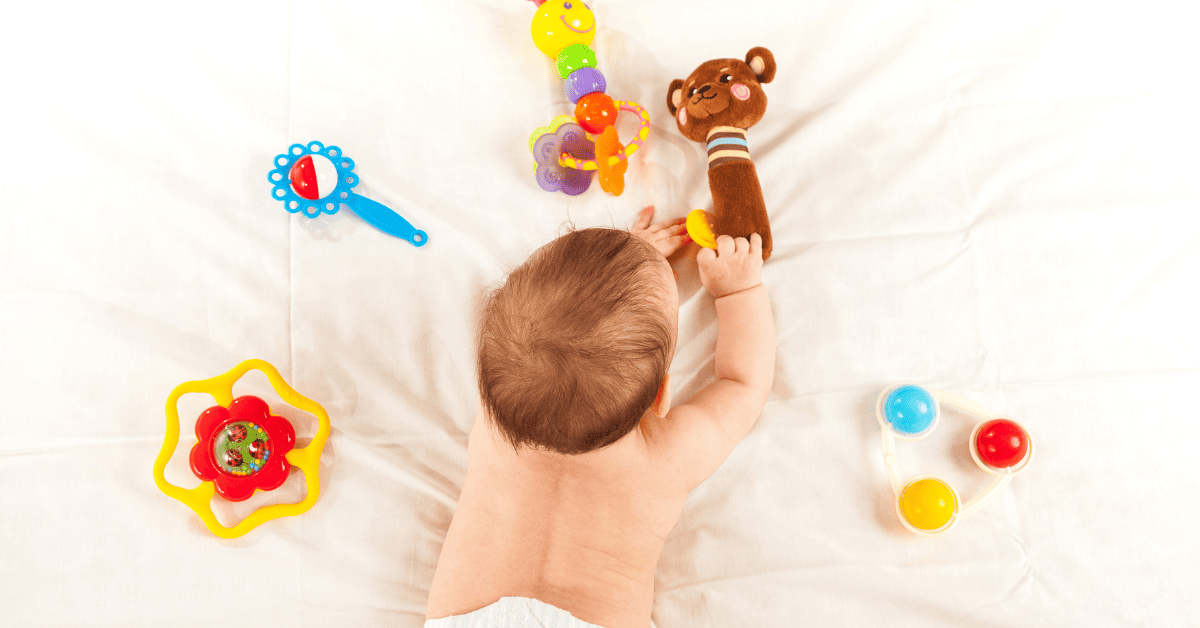
acozyfuture.com - You notice your baby staring at a toy, fingers twitching like they almost want to reach for it. It makes you wonder, when do babies start grabbing things?
The waiting can feel exciting but a little confusing too, asking questions like “Is my baby on track?”. The good news is this milestone happens in clear stages. Here’s what to expect and how your baby’s tiny movements turn into purposeful grabbing!
Table of Contents:
When Do Babies Start Grabbing Things? (Quick Answer)

Most babies begin reaching for objects around 2 to 3 months, but those early movements are often a bit clumsy. By 3 to 4 months, grabbing becomes more intentional. Around 5 to 6 months, their grip gets stronger, and they can hold and explore objects with much more control.
How Baby Grasping Skills Develop
In the early days, your baby’s hands seem to have a mind of their own. That’s because much of their movement is driven by reflexes.
Reflex vs. Intentional Grabbing
At birth, babies have something called the palmar grasp reflex. If you place your finger in their hand, they’ll instinctively hold on. It feels strong and purposeful, but it’s actually automatic.
Over time, that reflex fades, and something more exciting takes its place, control. Instead of reacting, your baby begins choosing to reach, grab, and hold.
Why Does It Matter?
Grabbing isn’t just about holding toys. It’s one of the first signs that your baby is learning how to connect what they see with how they move.
It builds:
-
Hand-eye coordination
-
Muscle strength
-
Curiosity and exploration
That simple reach for a toy is actually a big step in brain development.
Read More: Pincer Grasp Explained: When It Develops and Why It Matters
Baby Grabbing Things: Milestones by Age

Parents must remember one important thing: Every baby develops at their own pace. But. here’s a general timeline to help you understand what’s coming next:
0 to 2 Months
In these early weeks, these things may happen:
-
Your baby’s grip is reflexive
-
Hands are often clenched
-
No intentional reaching yet
You might notice your baby holding your finger tightly, but they’re not reaching for objects on purpose just yet.
2 to 3 Months
This is when things start to get interesting:
-
Hands open more often
-
They may swipe or bat at toys
-
Some accidental grabs happen
It can look a bit random, but this is actually when your baby is practicing.
3 to 4 Months
At this stage, you’ll likely see a big shift:
-
Purposeful reaching begins
-
They can grab lightweight toys
-
Movements become more coordinated
This is often when parents say, “Oh, they’re really trying now.”.
4 to 5 Months
At this stage, grabbing becomes more confident.
-
Better aim when reaching
-
Brings objects to their mouth
-
Starts exploring textures
Everything they grab tends to go straight into their mouth, and that’s completely normal.
5 to 6 Months
Now your baby is getting skilled. These are some of the signs:
-
Stronger grip
-
Transfers objects between hands
-
More control and intention
Grabbing is no longer just practice, it’s part of how your baby explores the world.
The Science Behind Grasping
Behind those tiny movements is a lot happening in the brain.
As your baby grows, connections between their brain and muscles strengthen. This helps them coordinate what they see with how they move.
It’s a mix of:
-
Motor skill development
-
Sensory learning
-
Repetition and practice
Each reach and grab is helping build those pathways.
Read More: A Guide for Parents: When Do Babies Hold Their Own Bottle?
Signs Your Baby Is Learning to Grab
Sometimes the progress is subtle. You might notice:
-
Watching their hands closely
-
Reaching toward objects
-
Opening and closing fists
-
Swiping at toys
These small actions are all part of the learning process.
How to Encourage Your Baby to Grab and Reach for Things

You don’t need fancy tools to support this stage. Simple interaction goes a long way.
0 to 3 Months
-
Hold toys within your baby’s line of sight
-
Use high-contrast or bold colors
-
Spend time face-to-face
3 to 6 Months
-
Offer soft, easy-to-hold toys
-
Use rattles or textured objects
-
Encourage reaching during play
Tip: The key is to make it feel like play, not practice!
Be There for Every Little Milestone with Cozycove Diapers
From those first tiny wiggles to crawling, standing, and those exciting first steps, your baby is always growing and discovering something new. Having a diaper that keeps up makes each moment even more special.
Cozycove Diapers are carefully designed to move with your baby, helping them stay dry, comfy, and ready to explore.
Crafted with soft, breathable materials and a super-absorbent core, they offer dependable leak protection while staying gentle on delicate skin. Whether your little one is rolling over or constantly on the move, they’ll stay happy and protected.
Choose Cozycove Diapers to support your baby’s journey through every stretch, step, and milestone.
👉 Check out our products:
Cozycove Snooze On Diapers (Travel Pack)
Cozycove Play Hard Diapers (Travel Pack)
When to Be Concerned
It’s natural to compare milestones, but try not to worry too quickly! Still, there are a few signs worth checking with a pediatrician:
-
No attempts to reach by 4 months
-
Very stiff or very floppy arms
-
Doesn’t bring hands to mouth
-
Uses one side much more than the other
Most delays are harmless, but it’s always okay to ask.
Grabbing and Other Milestones
Grabbing doesn’t happen in isolation. It connects to other big milestones like:
-
Sitting
-
Self-feeding
As your baby learns to control their hands, they’re also preparing for more independence.
Common Myths About Baby Grabbing Things
Let’s clear up a few common worries that parents may have.
Myth: Babies should grab things right after birth
Not quite. Early gripping is reflexive, not intentional.
Myth: Late grabbing means something is wrong
Development varies. Some babies take a little longer.
Myth: More toys help babies learn faster
It’s not about quantity, it’s about interaction.
Quick Milestone Summary for Parents
|
Age |
Grabbing Skill |
|
0-2 Months |
Reflex grip only |
|
2-3 Months |
Batting and early reaching |
|
3-4 Months |
Intentional grabbing |
|
4-5 Months |
Improved control |
|
5-6 Months |
Transfers objects |
Frequently Asked Questions: When Do Babies Start Grabbing Things?

Should my 2 month old be grabbing toys?
At 2 months, most babies are not yet grabbing toys on purpose. You might notice them swiping or briefly holding something placed in their hand, but this is often reflex-based. Intentional grabbing usually begins closer to 3 to 4 months as coordination improves.
What are signs of autism in babies' hand movement?
Some early signs may include limited reaching, repetitive hand movements, or less interest in grasping objects. However, these alone do not mean autism. Babies develop at different rates, so it’s important to look at overall development and speak with a pediatrician if you have concerns.
Conclusion
So, when do babies start grabbing things?
-
Around 2 to 3 months, they begin reaching
-
By 3 to 4 months, grabbing becomes intentional
-
At 5 to 6 months, they gain better control
It might start with a small twitch of the fingers, but before you know it, your baby will be grabbing everything in sight. Each little movement is a step toward exploring their world, one tiny grasp at a time!
Related Articles:
Pincer Grasp Explained: When It Develops and Why It Matters
A Guide for Parents: When Do Babies Hold Their Own Bottle?
1 Month Old Baby: Key Milestones to Expect
2 Month Old Milestones: Key Signs of Healthy Development
3 Month Old Baby Guide: Key Milestones Parents Should Know
When Can Babies See Color? A Sensory Development Timeline
Share:
Skin to Skin with Baby: Benefits, Timing, and Safety
What Is Parallel Play? Age, Signs & Benefits